Kodachrome II
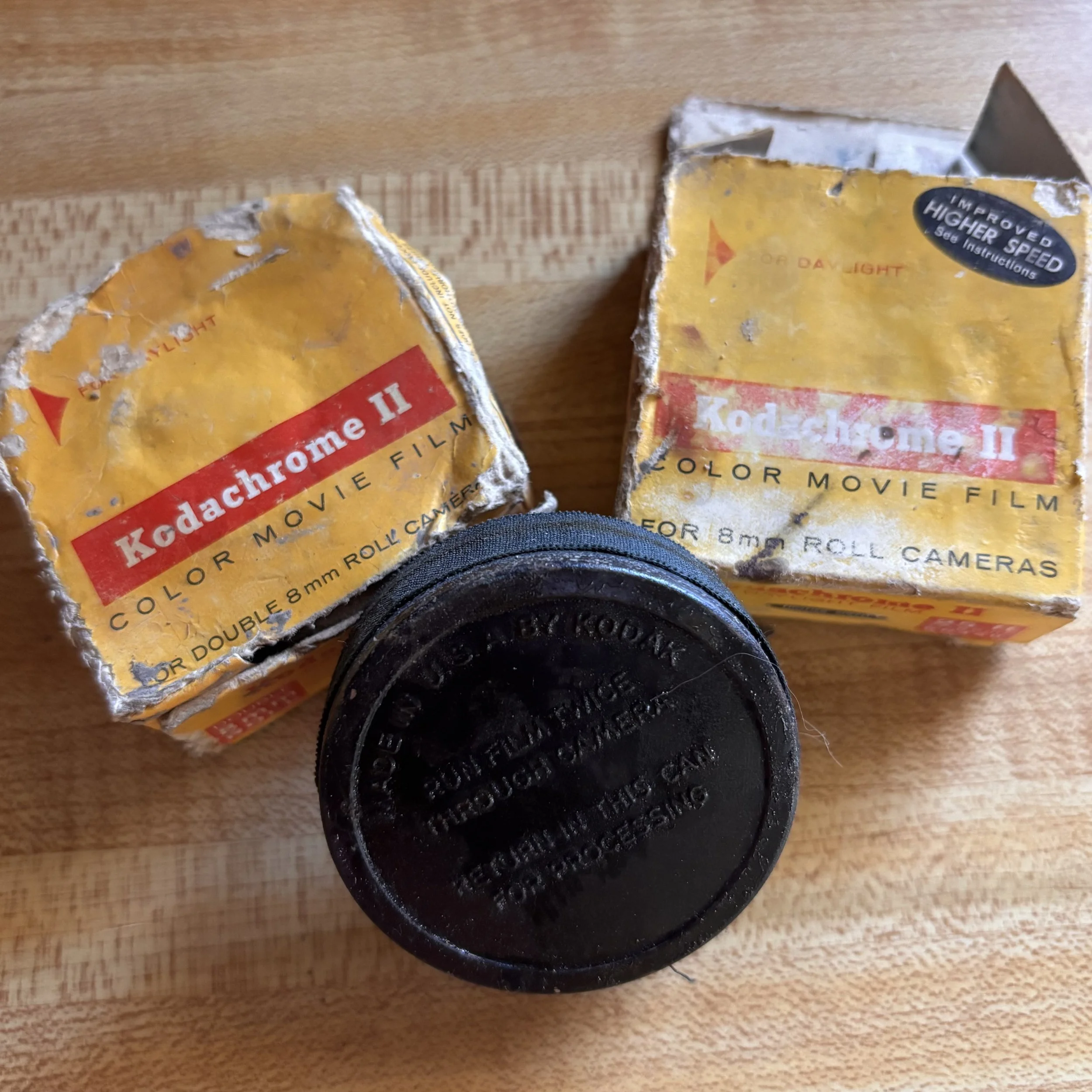
I wasn’t expecting to find anything like this.
We’ve been working on refurbishing a 1953 Spartan Spartette that had been sitting abandoned on my father-in-law’s property. The goal is to eventually live out of it, so most of what we’ve been doing has been practical like cleaning, gutting, figuring out what’s salvageable and what’s not.
When we moved the Spartan down to Texas to start work on it, I started going through the cabinets and tucked away corners. That’s where I found two small, battered yellow boxes of Kodachrome II movie film. I was excited I love old things that’s why we were drawn to the spartan and that’s why I still shoot film I love the style and feel of it all. I actually have a film camera for this film. I put the film in a drawer to be inspected later. But life is never that easy. After we got the rat infested insulation out of the camper it was caught in a flood when the Lampasas River overflowed. One roll of film didn’t survive. The other one did… at least physically. The boxes are worn, water-stained, and fragile. But still intact. Still readable.
And stamped right on them: “Process before June 1963.”
What this film actually is
This is Kodachrome II color movie film made for 8mm roll cameras. The kind used in mid century home movies. The kind families used to capture everyday life. I even have some old films of my mom and uncle as kids in this kind of film from the 60’s. Kodachrome itself has a reputation for longevity when stored properly. But this film wasn’t stored properly. I was very much abused sitting in an abandoned camper for decades. It went through heat, cold, humidity swings. And then it went through a flood.
But could it still be used? Technically, yes. Realistically, no. Even without the flood damage, film that expired in 1963 is already well beyond its usable life. The light sensitive chemicals inside degrade over time. What that means in practice is you would get severe loss of sensitivity, heavy fogging, color shifts or complete color failure. So it would be dark with really low contrast or completely blank. Add in decades of uncontrolled storage and water exposure, and the likelihood of getting anything recognizable drops even further.
But there’s a bigger issue. Kodachrome required a very specific development process called K-14, and that process is no longer available anywhere in the world. Production of Kodachrome film ended in 2009, and with it, the ability to properly develop it. Even if I shot this roll and somehow managed to expose something on it, there’s no standard way to bring those images back. There are rare cases where people attempt black and white cross processing, but results are unpredictable at best and with film in this condition, unlikely to yield anything meaningful.
So What Now?
There’s a point where something stops being a usable material and becomes an object with its own history. This film has already outlived its intended purpose by decades. It survived abandonment in Washington. It survived a flood in Texas. It made it from a forgotten camper to a workbench in Kansas. Shooting it now would almost certainly destroy it for the sake of an experiment that won’t produce much in return. Leaving it as is preserves what it is. It’s a ruminate of an analog world I have a lot of nostalgia for. And now it fits perfectly alongside the camera it was meant for, my simple Kodak Brownie 8mm. I do plan on still using this home movie camera this summer I need to order film for it but sadly it won’t be Kodachrome II. I do have hope Kodachrome will come back as I’ve seen some interesting stories come out about Kodak recently and there seems to be a push back to and a interest in film photography from even younger generations who didn’t grow up with it. Here’s hoping to small film development stands becoming prevalent again just like those road side coffee stands.
MERC